
– Experiencing the Mystery of Poland’s Frontier –
Poland’s border with Belarus and Ukraine is the eastern edge of Europe. It is a sparsely populated wonderland of lakes, forests, and open skies. Geopolitically, however, it is a place of great tension and turmoil… a territory that has been brutally disputed for hundreds of years. Our plan was to travel along the border from the top of Poland to the bottom and experience a frontier that few people visit.
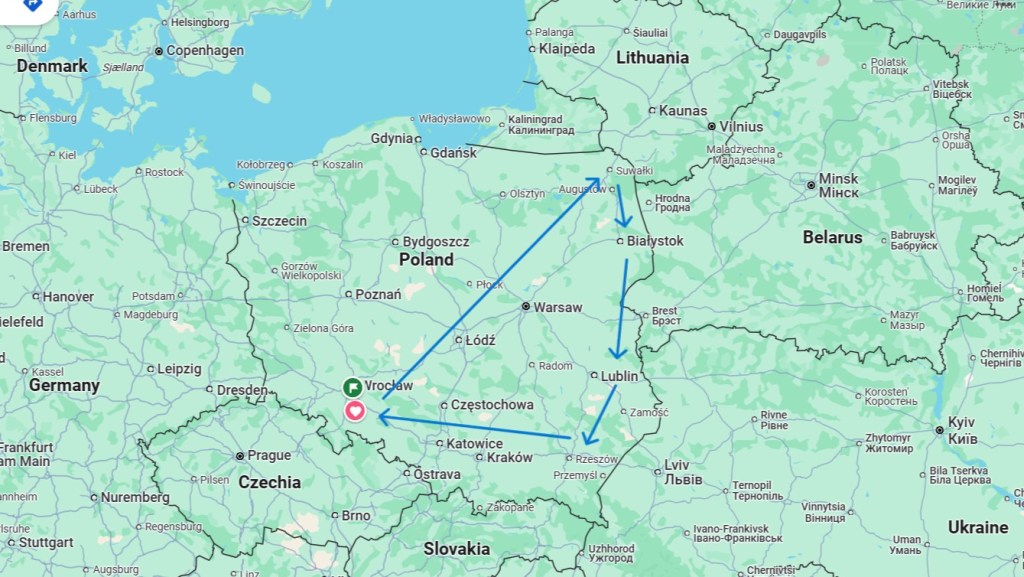
It took a full day to drive from Strzelin to Suwałki. After passing through Warsaw, the traffic died down and the road thinned out. Our cabin by the lake at Folwark Hutta (a small resort in the Gap) felt more removed from civilization than it actually was… a feeling I’d missed since leaving Idaho.
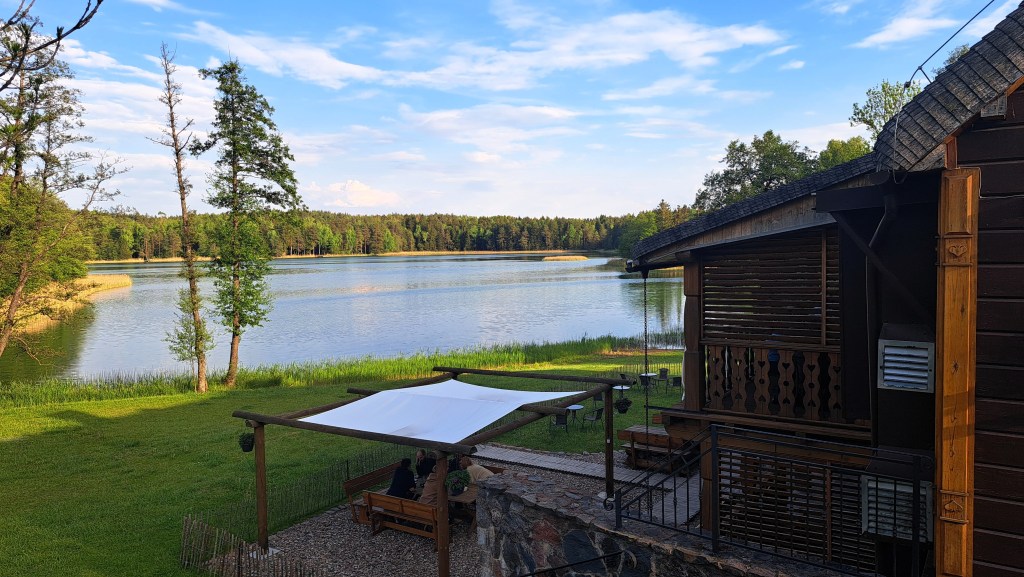
It was almost as quiet as the Frank Church Wilderness. In the surrounding countryside, there seemed to be only birds singing in the trees, fish rising in the lakes, and wind massaging away all thought. It seemed so far removed from the struggles associated with the region.
Suwałki Sits Near Russia
Only 65 kilometres (~40 miles) from the Kaliningrad Oblost, the narrow strip of land that separates Poland and Lithuania from their hostile neighbors (in Russia and Belarus) is known as the Suwałki Gap.

It felt like we were driving along ‘just another country road’, but there were signs that warned us not to stray too far. We knew we were close to No Man’s Land; there were Border Guard vehicles tucked into the trees observing and assessing passersby. Naturally, I smiled and waved… they did not return my courtesies.
The Salt Towers of Tężnie
On the second day, we traveled north to Tężnie and the saline cooling towers of Mazury. The towers are traditional wooden structures used to concentrate brine by natural evaporation. Found mainly in Poland and Germany, they consist of tall wooden frames filled with blackthorn brushwood. Brine is pumped to the top and trickles down over the brush, where wind and sun evaporate water… increasing the salt concentration.
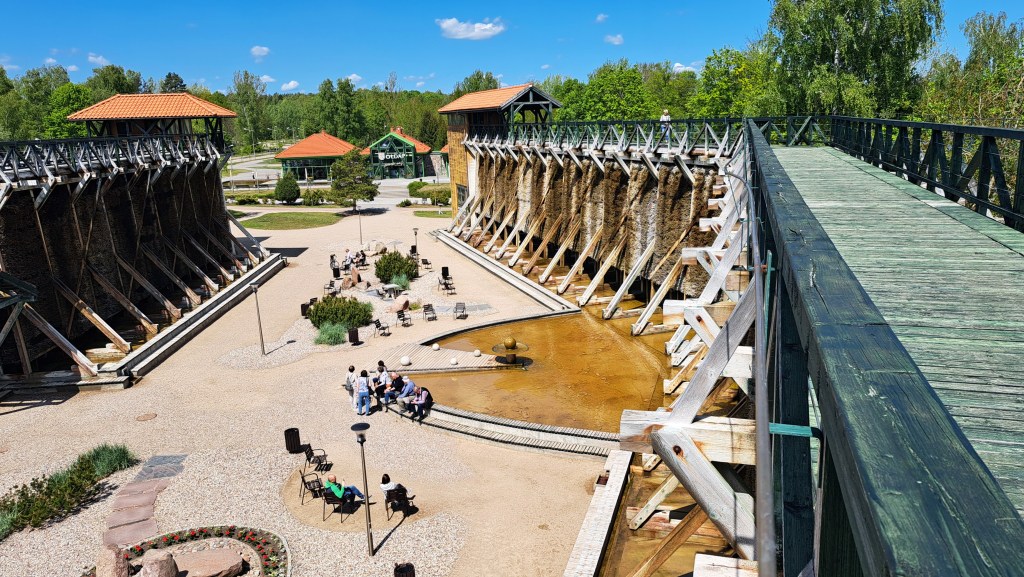
Originally used for salt production, the towers now serve therapeutic purposes; the air around them is rich in minerals such as iodine and bromine, offering benefits for respiratory health, allergies, asthma, and stress relief. Visitors walk or sit nearby to inhale the saline mist, similar to the effects of sea air.
The Lake District
Bright skies and cool breezes compelled us to explore Mazury, the lake district of Poland. We spent a day near Augustów traveling on the Rospuda River, a serene journey through one of Poland’s most pristine natural landscapes. Winding through a primeval forest, the river cuts a peaceful path past glacial lakes, thick spruce-pine woods, and rare peat bog ecosystems. It is ideal for boating; narrow, winding, and largely untouched… offering a quiet, immersive experience in wilderness.

South to Białystok
On our last morning at Folwark Hutta, the owner sat with us during breakfast. Well-traveled and personable, he spoke English and regaled us with entertaining stories about his remote resort and its history. He was surprised that we planned to spend the next five days in Białystok. He was raised in that city and declared that “one day is more than enough to see everything in town.”
We had other thoughts… and plans. We dedicated one day to visit Supraśl, another to explore the Białowieża Forest. Then a couple of days to see the sites in the city… including the Muzeum Pamięci Sybiru (Siberian Memorial Museum).
Monasteries and Museums
Tucked into the pines near Supraśl, the Orthodox Monastery of the Annunciation has stood steadfastly since 1498. The original church was destroyed in the war. After decades of careful work, it’s been rebuilt… stone by stone, fresco by fresco. It was reconsecrated in 2021. The grounds were peaceful, timeless, and the vibe was soulfully refreshing.
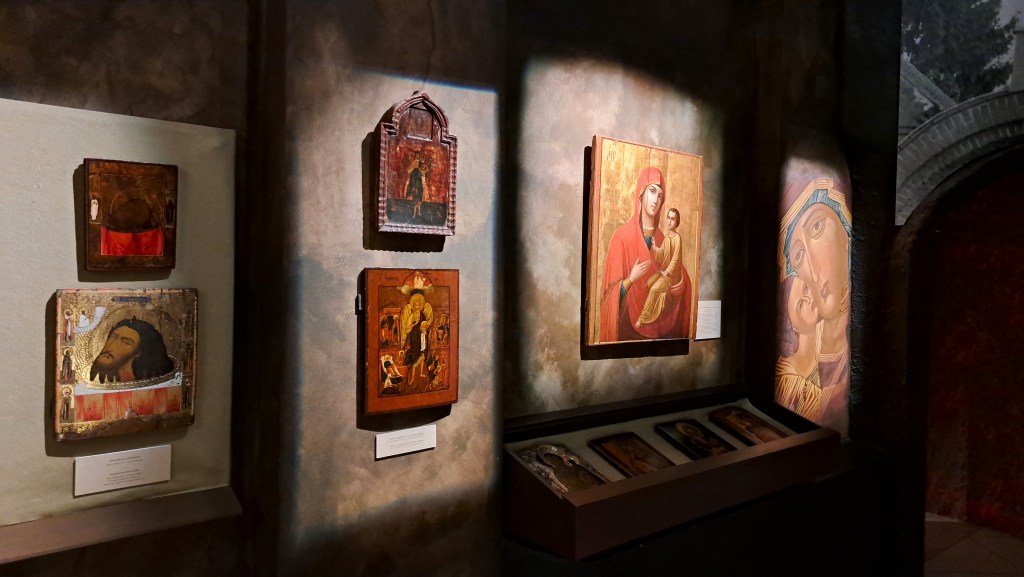
Right next door was the Museum of Icons. It houses over 1,200 Orthodox icons, some hundreds of years old. There were even pieces of fresco rescued from the rubble of the destroyed monastery. The exhibits were simple, reverent, and surprisingly moving. Quiet beauty, no fanfare.
Poland’s Dark and Ancient Forest
Near the top of Ela’s list of “things to see” on the eastern edge of Europe was the Bison Reserve in the Białowieża Forest. It is the continent’s largest remaining primeval forest. Straddling the border between Poland and Belarus, it covers over 1,500 square kilometres.
Its most famous residents are the European bison (żubr). They were once nearly extinct, but reintroduced in Białowieża during the 20th century and now roam freely in protected areas. The Bison Reserve near the village of Białowieża offered a rare chance to observe the magnificent animals up close, as well as other forest-dwellers. It was there that Ela demonstrated her powers when she cast her spell on the wolves. To everyone’s surprise, they not only came out to meet Best Polish Witch, but also engaged in a long conversation with her. I was lucky to capture those magical minutes on video (click here to watch it).
Museums of Sorrow
Our time in the city of Białystok was spent doing city things; visiting Ela’s friend from school, spoiling ourselves in good restaurants, and enjoying urban attractions… like the Siberian Memorial Museum and the Katyn exhibit.
The Katyn Massacre is one of Poland’s deepest sorrows. In 1940, the Soviets marched almost 22,000 prisoners of war into the forest and killed each one with a single shot to the back of the head. The prisoners were Polish military and police officers, border guards, and social elites. They were buried in mass graves that went undiscovered for years.
That exhibit left us breathless. It was a punch to the soul; quiet, deliberate, inescapably sad. Down there in the low light, surrounded by rusted steel and names carved in silence, you feel the weight of history pressing in. No dramatics, no speeches, just truth laid bare. We walked out changed, sobered, reminded. It isn’t the past—it’s a wound still breathing. And somehow, standing there, you bear witness.
Lublin and Rzeszow
The last few days were a contrast to the beginning of our trip to the eastern edge of Europe. The roads widened, traffic increased, and we passed long convoys of military vehicles as we got closer to Poland’s border with Ukraine.
We spent a day exploring an open-air museum in Lublin depicting historical village life. There were churches and houses typical of 19th century agricultural life… animals walking around… men thatching roofs, blacksmithing, and engaging in all manner of old-time activities.
More castles and museums, of course. One of our favorite observations is captured in the two pictures below: a view from the castle tower with medieval architecture on one side and Communist bloc apartments dominating the view on the other side.
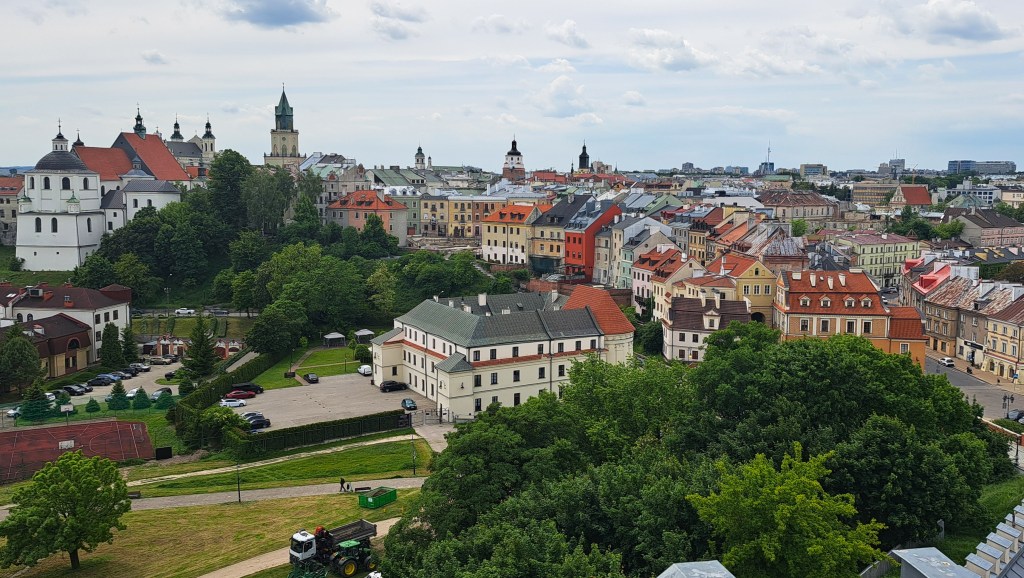
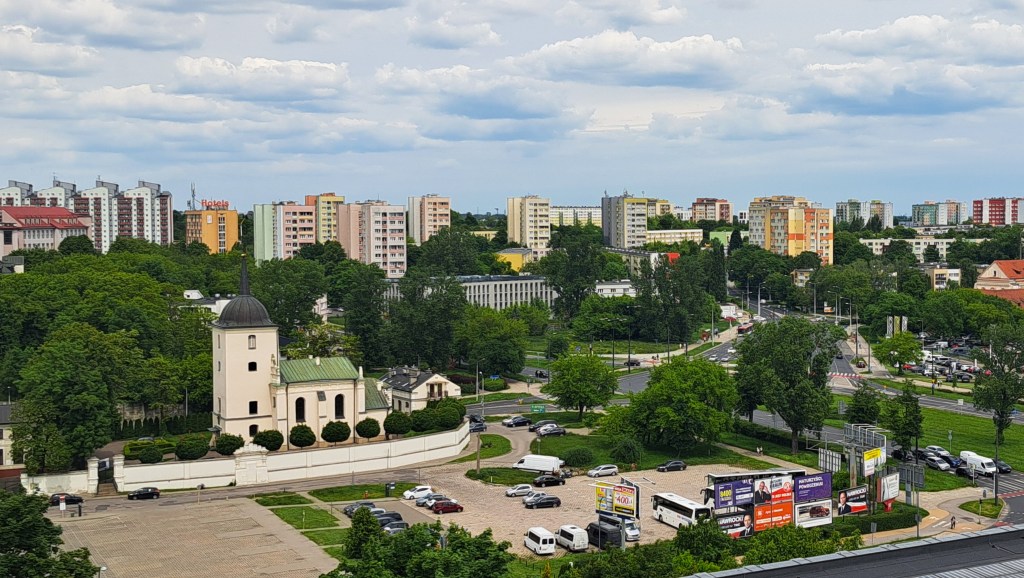
It was a visual reminder of the long, strange history stretched out across the eastern edge of Europe. Our trip along those borders stirred many emotions. It was a completely different kind of adventure… a road trip to remember.
A unique journey and unique experiences. Your holidays were very busy and interesting. I can’t wait for more relation.
Thank you! I am happy you came along on the trip… & will continue to share our adventures with our friends and readers.
Another great entry, Pat! Been following you for the last few years and have read your books. Keep them coming man. Flame on…..
-Mark
Well done. Love the stories and the writing style.
Love the glimpse into the life you are leading amigo! A long way from kicking around the sagebrush in Little Buffalo Basin!
A great memory to go along with so many others, I wished I was surprised by the cruelty of man, but unfortunately, I’m not. What a great trip this was man, and a new way of traveling for y’all, the long road trip. What a blast,
Another surprise. My expectations were low when Ela suggested we go out East, but she showed me some things I did not know about Europe.